
 FREE Shipping Worldwide



MimiSilk Vera RF Sculpt | 6.25MHz Gel-Free Radio Frequency Skin Lifting Device for Anti-Aging
MimiSilk Vera RF Sculpt | 6.25MHz Gel-Free Radio Frequency Skin Lifting Device for Anti-Aging
Say goodbye to messy gels and sliding motions. Experience clinic-grade 6.25MHz multipolar RF with our signature 'Stamp' technique to visibly lift jawlines and erase nasolabial folds from home.
 ⓘ
Say goodbye to messy gels and sliding motions. Experience clinic-grade 6.25 MHz multipolar RF with our signature 'Stamp' technique to visibly lift jawlines and erase nasolabial folds at home.
- 28 DAYS faster collagen renewal & 7-14 DAYS immediate thermal lifting
- 6.25MHz Multipolar Power - Professional-grade frequency for deeper, more effective collagen stimulation.
- Pure Gel-Free Technology - Advanced displacement current lets energy bypass the epidermal barrier without messy conductive gels.
- Triple-Level Precision - Adjustable power output (up to 18W) tailored to your skin's sensitivity and goals.
- Contour Sculpting - Engineered to lift the jawline, reduce nasolabial folds, and smooth the neck.
- All skin tones & Comfortable warming sensation & No downtime
- 178g Lightweight Precision Device(5cm x 3.8cm x 19cm).
- The plug-in version has more stable energy output.
Couldn't load pickup availability


2-Year Warranty
90 Days Money Back
Fast & Free Shipping
2-Year Warranty
90 Days Money Back
Fast & Free Shipping
2-Year Warranty
90 Days Money Back
Fast & Free Shipping
2-Year Warranty
90 Days Money Back
Fast & Free Shipping


6.25MHz Clinical Grade Power

Achieve Salon Results At Home
-
 BeforeAfterJawline Lifting with Home Device
"This device truly impressed me - I could even see a long-term improvement in my jawline definition."
-
 BeforeAfterMarionette lines after 4 Weeks
"Within just 4 weeks, I noticed my smile lines had faded significantly. As a 60-year-old licensed esthetician, I originally thought the results would take even longer."
-
 BeforeAfter30 Days for Wrinkles & Fine Lines
"After persistently using this product for 30 days at level 1, I was amazed to notice that all the fine lines on my face had changed."
-
 BeforeAfter5 Minutes & No Mess
"This device doesn’t use conductive gels so there is no mess, it will tighten skin on your jawline, crows feet, and marionette lines."
-
 BeforeAfterConsistency is key
"At 60, I was still looking for an effective solution, and this 6.25 MHz RF device has been easy to use and fit perfectly into my routine."
-
 BeforeAfterGEL-Free RF at-home Device
"My main concerns are loss of elasticity around my lower face, a slightly softer jawline, and a slightly puffier under-eye area. It’s an at-home tool worth your hard-earned money."
-
 BeforeAfter4 Weeks for Jawline & Nasolabial Folds
"Although it was only 4 weeks, I have already seen significant improvement in the fine lines across my face, especially around my mouth."
-
 BeforeAfterSubmandibular Region Lifting
"The loose skin under my jaw always made my neck look short. I once thought that surgery was the only solution, but to my surprise, this at-home device solved the problem."
-
 BeforeAfterThe Best RF Device without Gel
"My jawline has improved significantly. I noticed a clear improvement after using it for 10 minutes every day by the third week."
-
 BeforeAfterThe Clinic-level Device!
"As a dermato-cosmetologist who often receives facial injections, I mainly use Iris to improve my neck wrinkles. In 3 weeks, I've seen significant changes; the clinic-level device is amazing!"


Displacement Current vs Conduction Current Technology
Vera's "Displacement Current Technology" can bypass conventional transmission by treating the epidermis as an insulator and directing energy into the dermis, reaching depths of 2.5-3.0 mm, compared with 1.5-2.5 mm with conventional RF. Displacement current needs no gel, like wireless charging, using the epidermis as insulation to deliver energy to the dermis, reducing energy loss. This delivers 80-90% to the target, stimulating collagen regeneration.
Traditional currents require conductive gel, and both the gel and epidermis absorb energy, resulting in only 50-60% reaching the dermis to produce the desired effect.


Why MimiSilk Vera RF Sculpt?

None
6.25 MHz
2.5mm - 3.0mm
Minimal

None
1MHz
0.5mm - 1.5mm
Moderate–high

$50/month
1MHz
1.5mm - 2.5mm
Minimal
*People dislike traditional radiofrequency devices because gel use clogs pores, reduces effectiveness, irritates skin, is hard to clean, and adds ongoing costs.


How It Works

Defined Jawline
Sculpted V-Line

Nasolabial Folds
Smoother & Fuller

Neck Rejuvenation
Smoother,Firmer Neck
Thermal Induction

The 6.25MHz current creates a controlled thermal zone in the dermis while keeping the surface cool and comfortable.
Collagen Contraction

The heat causes existing collagen fibers to contract immediately, providing a visible "instant lift" effect.
Long-term Renewal

Consistent use triggers the body's natural wound-healing response, producing new, dense collagen and elastin over 4-8 weeks for long-lasting firmness.

Who Is This For

1. The Sophisticated Professional:
Who wants clinical results without the 20-minute cleanup required by gel-based devices.

2. The Age-Prevention Advocate:
Individuals noticing the first signs of volume loss and skin laxity.

3. The Post-Procedure Maintainer:
Ideal for those looking to extend the results of professional clinic treatments (like Thermage or Ultherapy) at home.
How To Use

After cleansing, if your skin feels too dry, we recommend applying facial oil or moisturizer to hydrate before using the device.

Turn on the device. Select your preferred intensity (Levels 1–3). The device will automatically smart-match and default to your last used setting.

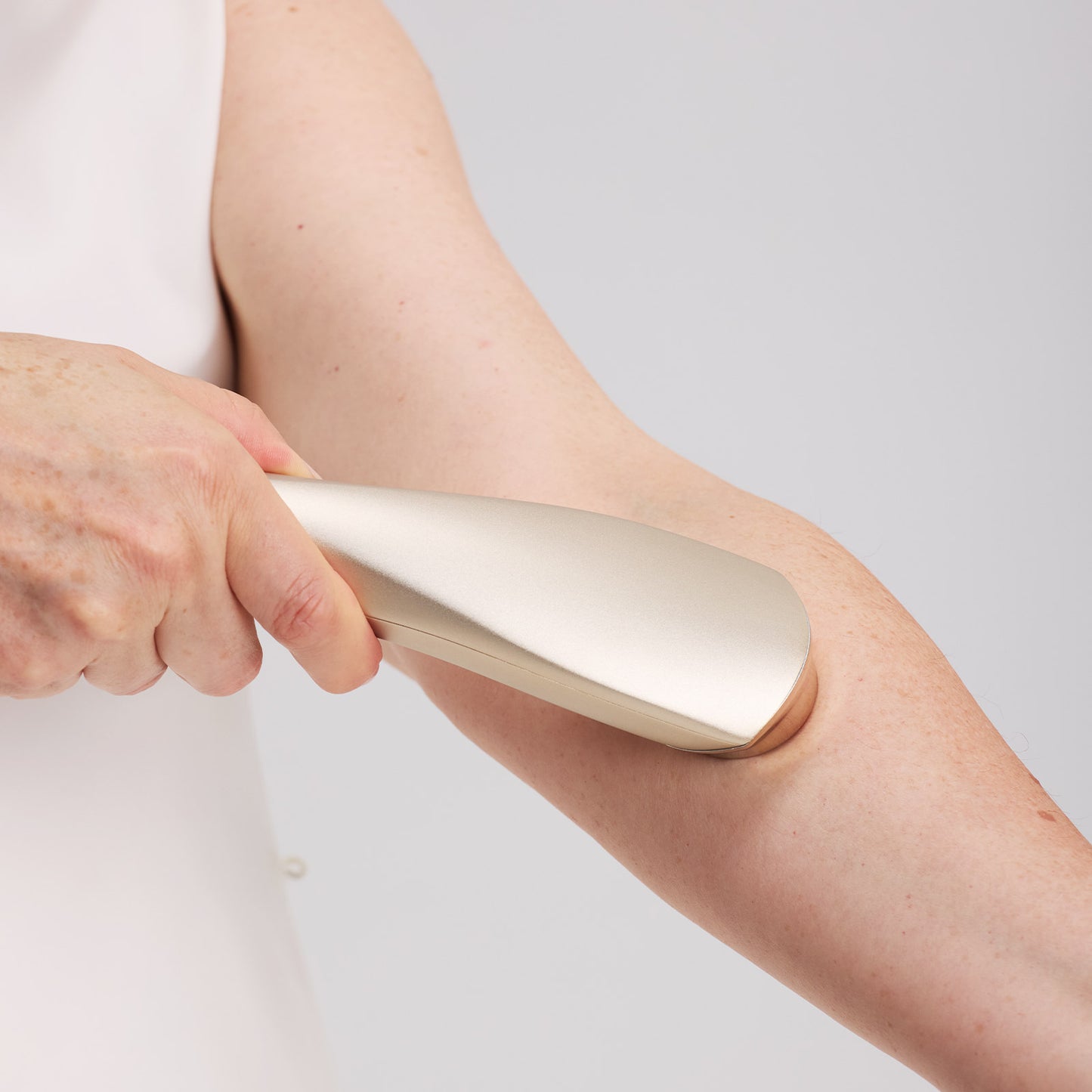
Place the electrode pads firmly against your target areas (cheeks, forehead, neck—avoid thyroid area). Hold the device completely stationary (stamp-like application).
*No gel required.

Skin may feel warm or dry post-session. Immediately apply the MIMISILK® PDRN mask or your own mild, hydrating skincare to cool and soothe the skin.
- My slight jowling has all but disappeared, the fine lip lines are almost gone
- It lifts everything up!! Gel free is much easier and compatible to all areas of my face.
- I can already see results after a month's use. It's so easy to fit into my routine
It's been helping my smokers line and smile lines. I upgraded to level 2 a month ago and so far i'm loving the results. So glad I bought the vera!
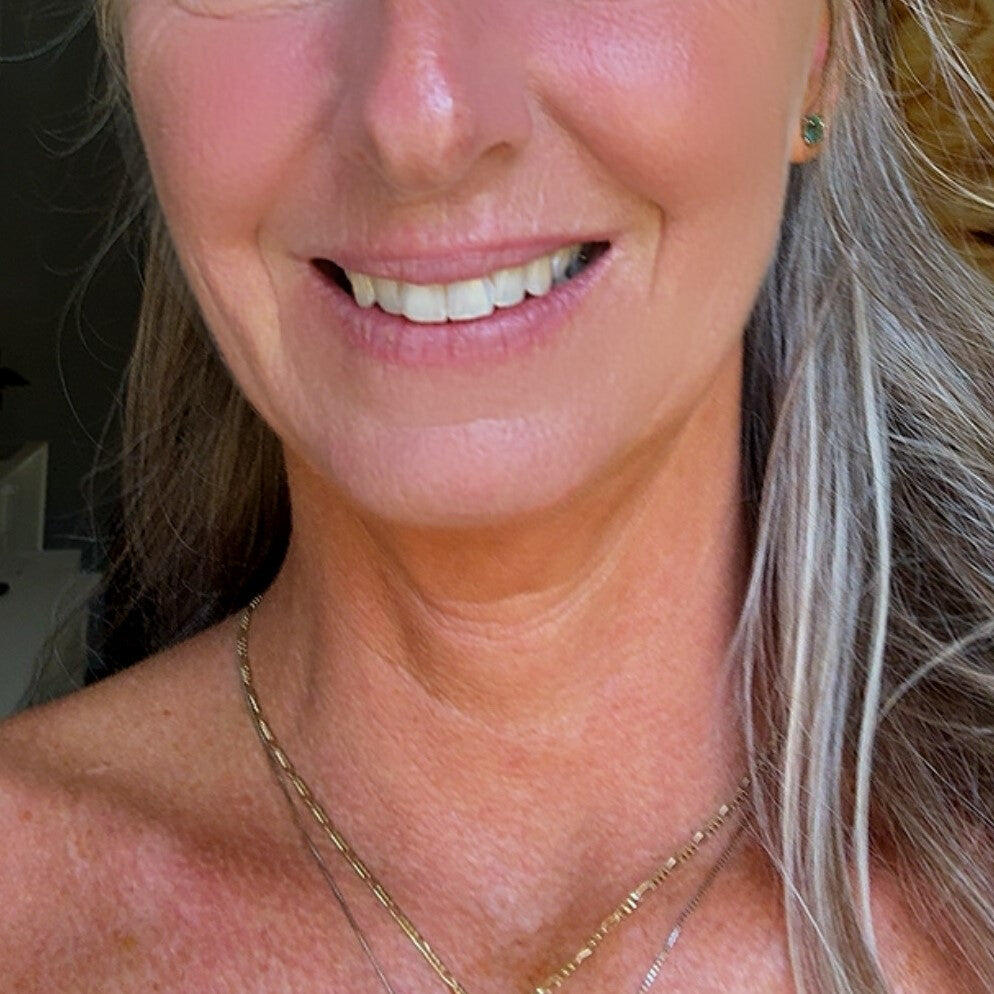
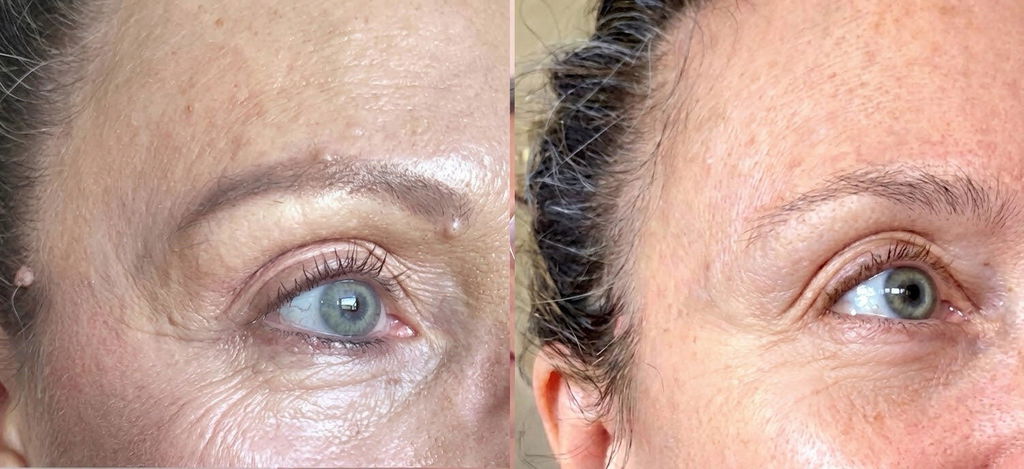
The Vera is amazing I already can see results on my crows feet and my lower face. The lines are visibly softer and i'm feeling more lifted around my cheeks and jawline. It works like magic, plus no gel!
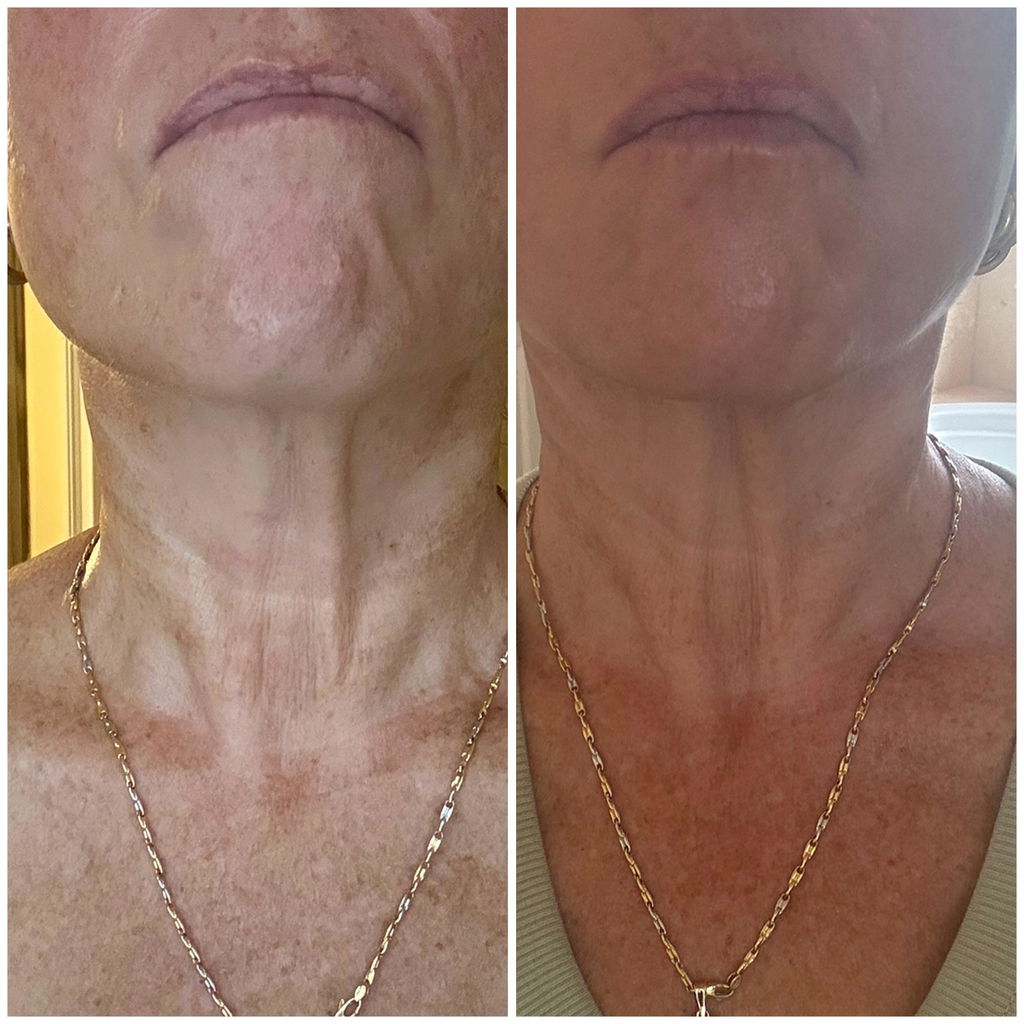
This is a fantastic product! I am introducing it to my audience on YouTube tomorrow at “Glow Up Over 50 with Kim” for a “Grandma Makeover”. It has smoothed out my loose skin on my neck after losing 35 lbs. I am amazed what one month has done with this product! Thank you MimiSilk for helping to boost my confidence again at 51. I never thought I’d feel this good at this age! Amazed!
I've been dabbling with at home devices for a few years now but honestly found them hard to make a habit. They were a right old faff! Bulky things needing conducting gel...ugh. And, usually, for barely noticeable results. But I love, love, love mimisilk vera rf! It's a beautiful device, and feels very well designed for use. I can already see results after a month's use. It's so easy to fit into my routine in the evening - usually while watching a film or something - and, best of all, no sticky gel to clean up. I usually follow up with a hyaluronic acid based gel moisturiser. I'm a 59 yo woman with mild skin laxity and fair complexion. Yes, some may baulk at the initial outlay but I feel it's an investment that will pay for itself far more than topical products. Gets 5 stars from me.
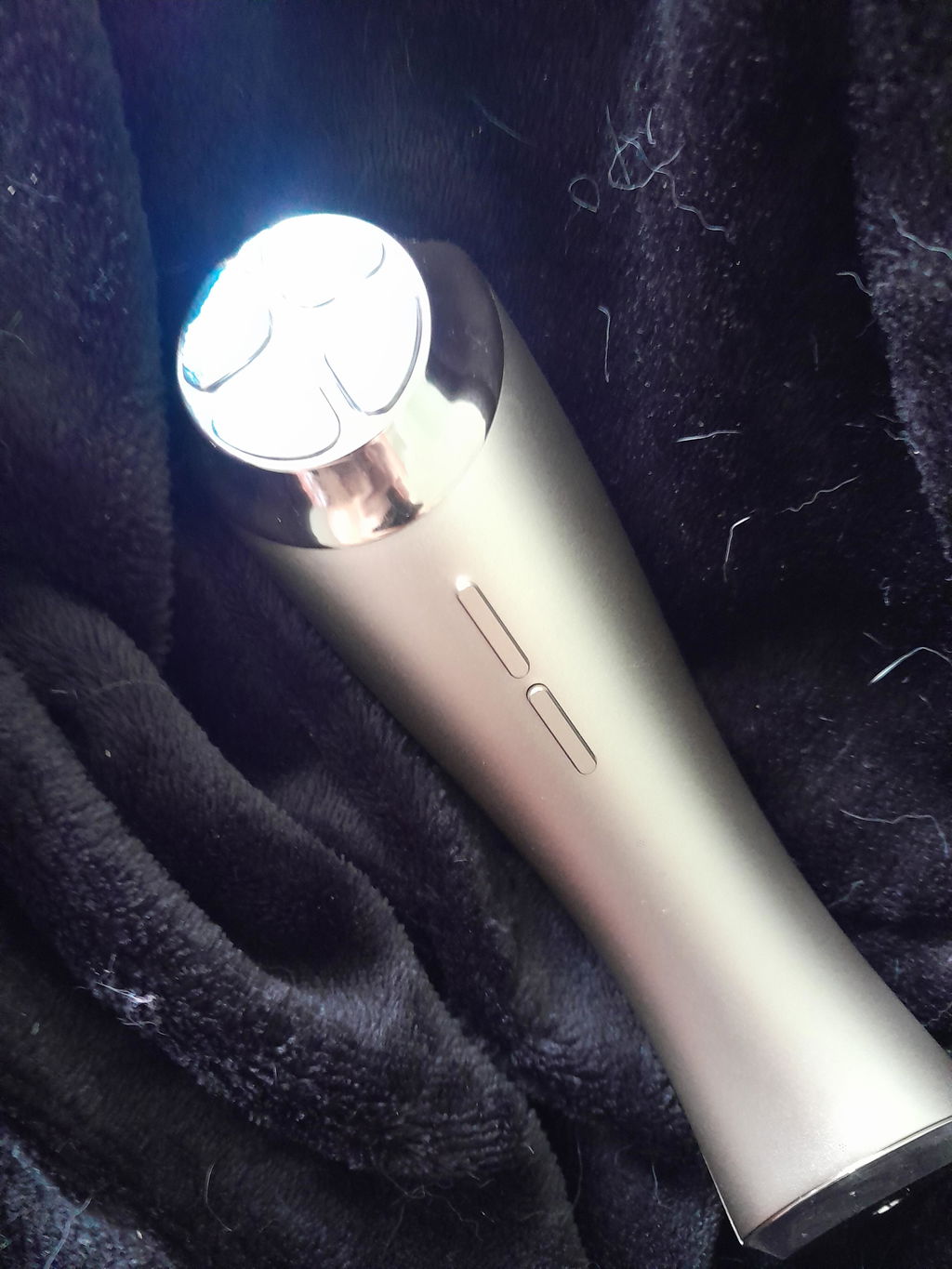
I have used it consistently for 30 days and do feel like I'm noticing a slight improvement. The device itself feels very quality and I enjoy using it. I really like that no gel is needed beccause I have used devices in the past and never liked having to use a conducter gel. Time will tell, but so far I am hopeful!
I want everyone to know how thrilled I am with Mimisilk as a company!!! I had issues trying to use my Paypal Credit and these lovely people took care of a Refund for me with so much care and great service... My concerns were eliminated within 1+ day with kindness and understanding. I'm highly grateful and encourage everyone to trust your transactions here!!! THANK YOU MIMISILK!!!!! AAAAA+++++
I am 73 and just completed my 3rd month of the Vera. The results are impressive. My slight jowling has all but disappeared, the fine lip lines are almost gone, the skin puckering on my chin is gone and the lines on either side of my chin have visibly lessened, although not totally gone. Overall, I can see and feel the tightness of my skin. Do not hesitate to buy the Vera. I love it!
This is my second month of the vera. It is so easy to use, I love it is gel free. I can feel my skin is definitely tighter overall.
The Vera works to tighten my face and it is easy to use. It lifts everything up!! Previously I was using the Newa device and loved it, but it is more time consuming and the gels are often sold out. Gel free is much easier and the Vera is more compatible to all areas of my face. I love this device and am very happy with the results. I am using level 2 every other day.
I love it , can’t wait until l can used level 3. I already can see a some difference and later am thinking about buying the Iris laser in a few months. Maybe a Christmas gift to myself.
A great tool for the skin!
amazing product. when you start using it in level 3 you can see results in weeks.
Mimisilk has done it again!
A non-functioning, extremely basic device that is clearly highly overpriced for what it is. To make matters worse, the return policy is unacceptable: even when the product is defective, the customer is expected to arrange and pay for the return themselves. Very disappointing product and customer service!
Dear Tobias, we are very sorry for the unpleasant experience you have had. We have arranged for a replacement device to be sent to you. The faulty device needs to be returned for further inspection, as required. However, due to restrictions imposed by the logistics company at the German warehouse, we are unable to issue a return label at this time. Therefore, we need you to return it yourself. But don't worry, we will cover the shipping cost.
so easy and fast without this thick gel
Loving this device! Another hit by Mimisilk. I recommend Vera to friends and family.
I love this device. No conductive gel and lifts and sculpts my saggy skin. I have already noticed a difference after one month.
So far so good.
Been using the device for about a month now I can feel the tightness in my skin after use and the next morning. Can definitely see a change in the lower half of my face/jawline. It is subtle, will continue to use.
We're so glad to hear you're seeing positive results! After the first month, you can now move on to Level 2 or 3 (based on your skin sensitivity and tolerance) and use Vera every other day. Don't hesitate to reach out if you have any questions. Thanks for sharing your experience!
No bad reaction for my skin at all. I look forward to seeing the results
I am very satisfied with it so far! Skin around my cheeks just feels more bouncy and firm on both sides.
I've been using it on level 2 for weeks. It heats up just enough to feel relaxing, not uncomfortable.
Works as advertised. Subtle but noticeable changes after each use. I would definitely recommend to others. Great for daily use.
Hi Just purchase mine like know what the warranty is thank you
Hi! We offer a 2-year warranty for your Vera. For more information, please feel free to contact our customer support team.
Can I use Botox with Vera?
Hi! After Botox, please wait at least 4 weeks before using Vera. Please contact our customer support if you have more questions or would like more details about Botox treatment and Vera, thank you!
Hi, Is this safe someone with a pacemaker?
Hi! Unfortunately, Vera is not suitable for someone with a pacemaker. Its RF energy can disrupt how the pacemaker functions.
I use tretinoin in my evening skincare routine. This device says it can’t be used with tretinoin or retinol? Is this true? If so, I need to return the device.
Hi! Yes, we recommend pausing tretinoin, retinol, or other acid-based skincare products for 3-7 days before and after using Vera. Using them together could make your skin more sensitive and prone to irritation, especially if you're just starting Vera. This pause helps you monitor your skin and gives it more time to recover between RF device use and skincare treatments. Our customer support team will contact you to help with any further questions or requests. Thank you!
Is it ok to use if you have a dental implant?
Hi! Yes, it is okay to use Vera if you have a dental implant.
Is this FDA approved and does it lift jowls?
Hi! Yes, Vera can lift jowls. As for FDA status, because this is one of the world's first no-gel RF products, the application process is taking longer than we expected; we expect to obtain certification by mid-next year. This product has been sold offline in Asian markets for over five years, and its effectiveness has been confirmed and validated by many customers. You can use it with confidence. Please contact us if you have any more questions. Thank you for your support!
Hi, I don't really feel the heat on mimisilk vera on level 1, if I use the level 2, can I use it everyday? Thank you
Hi! We don't recommend using Vera every day on Level 2. We still suggest using it on Level 2 every other day for a while and observing your reactions. If your skin tolerates it well, you can then try using it every day.
FAQ
-
What is radio frequency?
Radio Frequency, abbreviated as RF, is a type of high-frequency alternating electromagnetic wave. Its frequency ranges from 3 kHz to 300 MHz.
Principle: By using currents of specific frequencies, it precisely and selectively transfers thermal energy to the dermis and subcutaneous tissues of the skin. When the dermal tissue is heated, it causes the originally slack collagen fibers to instantly heat up, contract, and continuously stimulate the regeneration of collagen protein. Eventually, this reduces wrinkles and tightens the skin, resulting in a youthful appearance. -
Does Vera RF Sculpt™ require conductive gel?
No. The Vera uses displacement-current technology, which does not rely on traditional conductive methods. Traditional radio frequency requires gel-assisted conductivity, whereas displacement current can cross the stratum corneum via the electric field and directly trigger molecular oscillations and heat generation in the dermis, thereby enabling deep heating without the need for gel. At the same time, because the epidermis has lower conductivity, heat is less likely to accumulate on its surface, resulting in greater comfort.
-
Why does 6.25 MHz penetrate deeper than 1 MHz? How do the two differ in effect?
Frequency alone doesn’t determine Vera’s penetration depth. Conventional radiofrequency (RF) devices using conducted currents penetrate deeper at lower frequencies. Vera’s "Displacement Current Technology” can bypass conventional transmission by treating the epidermis as an insulator and directing energy into the dermis, reaching depths of 2.5–3.0 mm, compared with 1.5–2.5 mm with conventional RF.
Conventional devices also lose energy in the conductive gel and epidermis, so only about 50–60% reaches the target. Vera's technology minimizes this loss, delivering 80–90% to the dermis to stimulate collagen regeneration.
1MHz conductive current + household power (5–20W) : Penetrates the epidermis and upper dermis to target fine lines.
6.25MHz displacement current + multipolar RF: Addresses collagen-related laxity, softens the jawline and laugh lines, and lifts and tightens the face and neck.
In summary, Vera claims faster, better results than other at-home RF devices that require conductive gel.
-
How do displacement and conduction current technologies differ?
Conduction current uses gel to transfer energy layer by layer, causing energy loss and shallow penetration. The final effective energy is only 50-60%. Displacement current requires no gel and bypasses the epidermis, delivering 80–90% of effective energy to the mid-to-deep layers of the dermis.
-
How to use the Vera RF Sculpt?
- Cleanse your skin, then apply facial oil or moisturizer to keep the skin hydrated before using the device.
- Treat the cheeks, sides of the nose, forehead, or neck, avoiding the thyroid area. No gel is required. Hold the device in place over each treatment area using the stamp-like application.
- After a session, your skin may feel slightly warm or dry. You may apply the PDRN face mask included with Vera, or use your own gentle skincare products to help provide immediate hydration and moisturization.
- Be sure to use sun protection when going outdoors the day after treatment. We recommend applying a generous amount of sunscreen (SPF 30+ PA++++). For additional protection, wear a sun hat and sunglasses.
Tips:
- Vera requires a power source to operate.
- Turn on the device and select level 1. Please continue using it at level 1 for at least two weeks before increasing the intensity for faster results. If you experience any skin discomfort, return to level 1 and stay there for at least one month before increasing the intensity again. At level 1, radio frequency (RF) thermal energy already reaches the dermis. Even if you feel little to nothing on the epidermis (the skin's surface), the device is still functioning effectively. Do not switch to level 2 or 3 too soon.
- After holding the device against your skin for 6–10 seconds, it will beep to remind you to move to the next area.
-
What are the energy and temperature corresponding to each of the 3 levels?
Tailor your treatment to your specific needs with three graduated power levels:
- Level 1 (4.5W): Gentle maintenance and enhanced absorption of skincare actives. The dermis temperature reaches 45-46°C / 114.8°F.
- Level 2 (9W): Targeted treatment for fine lines and early signs of skin laxity. The dermis temperature reaches 47-48°C / 118.4°F.
- Level 3 (18W): High-intensity sculpting for jawline definition and deep wrinkle reduction. The dermis temperature reaches 49-50°C / 122°F.
-
How is the precise control effect achieved with different skin thicknesses?
MimiSilk Vera has dual intelligence systems.
- Intelligent temperature control: Skin temperature is consistently kept below 117°F, ensuring safety and comfort.
- Intelligent time control: 6-10 seconds each time, full face for 10 minutes. Real-time monitoring of skin impedance and dynamic adjustment of energy output ensure that safe and effective care energy can be provided to different skin types and different areas.
-
What does RF feel like?
Most users experience a comfortable warming sensation during treatment.
-
I don’t feel any heat at Level 1, but Level 3 is too hot. Why do some areas of my face feel hot while others don’t?
1. I don’t feel any heat at Level 1.
According to Displacement Current Technology, the heat is designed to penetrate directly into the dermis; therefore, it is normal to feel little to no heat on the epidermis (the skin's surface). Level 1 provides a gentle, warm sensation and is ideal for sensitive skin. Please use the device at Level 1 daily for at least two weeks. For your skin's safety, do not increase the intensity level prematurely.
2. Level 3 is too hot.
Vera is one of the most powerful devices on the market, which is precisely why it is so effective. The skin's tolerance varies from person to person. We suggest the following: 1. Lower the intensity level. 2. Wrap the electrode head in a layer of plastic wrap (cling film). 3. Move the device away from your skin if it feels too hot, and don't wait for the beep sign.
3. Is it normal for some areas of my face to feel hot while others don’t?
Skin thickness varies across the face, so some areas may feel warmer than others. No need to worry—if the heat becomes uncomfortable, move the device away and don't wait for the beep.
4. How many times should I apply the device to the same spot?
We recommend using this device in the same area no more than three times. During movement, there might be some partial overlap with previously processed areas, but this does not affect anything. Please ensure that your skin can fully tolerate it.
-
Stamping vs. sliding, which is better?
Compared with the stamping type of radio frequency, the sliding type that requires gel has the following disadvantages:
- They can clog pores and cause breakouts;
- They are inconvenient to clean and stick to hair;
- The gel absorbs some of the device's energy, reducing overall effectiveness;
- The gliding scanning method with gel can pull on the skin, worsening skin laxity;
- Gel is a consumable, which increases skincare costs over time.
-
How often should I use it?
The level 1 can be used daily. After upgrading to the 2nd or 3rd level, it is recommended to use it every other day, depending on your skincare goals and tolerance.
-
Is there downtime?
No. RF treatments are non-invasive and designed for daily-life compatibility.
-
When will I see results(MimiSilk Vera)?
Many users notice improved glow and firmness within 4-8 weeks of consistent use. Longer-term collagen support improves gradually.
- Please use it at level 1 for at least 2 weeks. Once your skin has established tolerance, upgrade to levels 2 or 3. At level 1, the expected effect usually takes at least 28 days to manifest. Generally, following the collagen regeneration cycle, you'll notice a more noticeable effect within 2-3 months.
- When your skin can tolerate level 3, you can see a short-term lifting and tightening effect within 7-14 days.
-
Can I use skincare afterward?
Yes. The device may help support enhanced skincare absorption after treatment.
-
Will the Vera RF device result in fat loss?
No. Because:
- The 6.25 MHz frequency is close to that of Thermage (6.78 MHz). However, due to the safety restrictions of home-use devices, Vera's power output is only about one-quarter that of professional-grade RF devices used in clinics.
- The difference in penetration depth, or more specifically, the difference between monopolar and multipolar technology, means that it falls far short of achieving any lipolytic, or fat-dissolving, effects.
- During treatment, the epidermis is 4–6°C cooler than the dermis, which reaches approximately 39-44℃/111.2°F. The temperature in the fat layer does not exceed 40℃/104°F.
In conclusion, Vera will not cause fat loss.
-
What are the precautions for aftercare and sun protection?
- After use, your skin may feel slightly warm or dry. You may apply the PDRN face mask included with VERA or use your own mild skincare products to help cool the skin and to provide immediate hydration and moisturization.
- Be sure to use sun protection when going outdoors the day after use. We recommend applying a generous amount of sunscreen (SPF 30+ PA++++). For added protection, wear a sun hat and sunglasses.
-
What are the differences between Vera and Iris? How should we choose?
Both Vera radiofrequency (RF) and Iris laser can promote collagen regeneration, but their mechanisms of action differ.
- Iris laser uses selective photothermolysis, making it more suitable for localized issues such as brightening skin tone, reducing pores, acne scars, pigmentation, and fine lines. Vera RF, on the other hand, heats the dermis evenly and volumetrically, making it more suitable for skin tightening and overall facial contour lifting. Compared with laser-based precise repair, RF is better suited for large-area collagen activation and firming/lifting.
- If you only have skin laxity, Vera is the best choice. If you have other anti-aging needs, Iris is a more cost-effective, multi-functional home device. Of course, if you want to address skin laxity, pores, acne scars, and pigmentation simultaneously, having both devices is a good option. You simply need to use them every two days.
-
How to Use MimiSilk Iris and Vera Together?
Allow a 48-hour interval between using the Vera, the Iris, and other home-use laser devices. There are two ways to use two devices together:
For full-face treatment: Space the use of the Iris and Vera 48 hours apart, resulting in a combined total of three to four sessions per week for the two devices. There is no need to worry about the frequency being too low, as the thermal effect on your skin remains balanced.
For partial-face treatment: For example, use the Iris on the upper half of the face and the Vera on the lower half. You can follow the specific usage schedules for each device: use the Iris 3–4 times a week (following the 8+4 cycle), and use the Vera on Level 1 daily for the first month.
-
What is the difference between the Vera and Thermage?
In the home-use device market, Vera operates at 6.25 MHz, which is closest to the 6.78 MHz frequency used in professional Thermage treatments. Both are essentially radiofrequency volumetric heating technologies that stimulate dermal collagen contraction and regeneration through heat to achieve a firming and lifting effect.
The difference is that Thermage uses professional-grade monopolar radiofrequency, resulting in stronger, more painful, and more expensive sessions. Vera, on the other hand, uses home-use multipolar displacement-current radiofrequency, which causes no damage to the epidermis and produces only a slight warming sensation. It has no recovery period and emphasizes safety and comfort for home use, making it the most cost-effective Thermage alternative for home use.
-
Which is better for facial sagging: home-use radiofrequency (RF) or microcurrent?
With age, dermal fibroblasts produce far less collagen (types I and III) and elastin, while excess matrix metalloproteinases (MMPs) break down these fibers. Subcutaneous fat shifts and thins, the superficial musculoaponeurotic system (SMAS) loses tension, and facial muscles relax, weakening structural support. Signs of skin laxity include:
- Sagging or sunken cheeks
- An ill-defined jawline or double chin
- Drooping eyelids or under-eye sagging
- Loose neck skin
When choosing between RF and microcurrent devices at home to address these concerns, consider the following factors:
1. Targeted Layers:
- Radiofrequency (RF) targets the superficial and mid-to-deep dermis.
- Microcurrent targets superficial facial muscles, musculoaponeurotic layers, and the epidermis.
2. Biophysical/Biochemical Mechanisms:
- RF energy heats the superficial and mid-dermis to 40–42°C, contracting existing collagen and stimulating new collagen production.
- Microcurrent mimics the body’s bioelectricity, passively contracting facial muscles to exercise them and restore tone.
3. Effects:
- RF offers long-term benefits by activating fibroblasts to produce collagen and elastin, supporting the body’s self-repair.
- Microcurrent immediately tones facial muscles through passive contractions and relaxation, restoring elasticity and tension while reducing puffiness and relaxing tight muscles.
In total: Microcurrent (EMS) de-puffs immediately; radiofrequency (RF) better addresses dermal collapse with longer-lasting results.
-
How long should I wait after using retinol, AHAs/BHAs, or vitamins C/E before using the Iris/Vera device?
Wait 24 hours after retinol and 48 hours after AHAs/BHAs. Niacinamide, ceramides, hyaluronic acid, panthenol, peptides, and vitamins C/E require no waiting period. Consult a dermatologist before using the device with topical or oral retinoids, such as tretinoin, isotretinoin, or Accutane.
If you have sensitive skin or low skin tolerance, we recommend extending the above intervals to 72 hours. If your skin barrier has been damaged by medical treatment, please follow the doctor's advice. -
What intervals should you leave between at-home beauty devices (such as LED, laser, RF, microneedling, or microcurrent) and the Iris/Vera device?
When the skin barrier is not damaged:
Wait 12 hours after LED masks (including laser), LLLT, or microcurrent devices; 24 hours after non-ablative broad-beam lasers (such as Nira); and 48 hours after non-ablative fractional lasers (such as Tria), at-home RF, or microneedling with 0.2–0.3 mm needles. For needles longer than 0.5 mm, consult a dermatologist.