
 FREE Shipping Worldwide



MimiSilk Vera RF Sculpt | 6.25MHz Gel-Free Radio Frequency Skin Lifting Device
MimiSilk Vera RF Sculpt | 6.25MHz Gel-Free Radio Frequency Skin Lifting Device
Say goodbye to messy gels and sliding motions. Experience clinic-grade 6.25MHz multipolar RF with our signature 'Stamp' technique to visibly lift jawlines and erase nasolabial folds from home.
 ⓘ
ⓘ
- 28 DAYS faster collagen renewal & 7-14 DAYS immediate thermal lifting
- 6.25MHz Multipolar Power - Professional-grade frequency for deeper, more effective collagen stimulation.
- Pure Gel-Free Technology - Advanced displacement current allows energy to bypass the epidermal barrier without the need for messy conductive gels.
- Triple-Level Precision - Adjustable power output (up to 18W) tailored to your skin's sensitivity and goals.
- Contour Sculpting - Specifically engineered for lifting the jawline, reducing nasolabial folds, and smoothing the neck.
- All skin tones & Comfortable warming sensation & No downtime
- 178g Lightweight Precision Device(5cm x 3.8cm x 19cm).
- The plug-in version has more stable energy output.
Couldn't load pickup availability


2-Year Warranty
90 Days Money Back
Fast & Free Shipping
2-Year Warranty
90 Days Money Back
Fast & Free Shipping
2-Year Warranty
90 Days Money Back
Fast & Free Shipping
2-Year Warranty
90 Days Money Back
Fast & Free Shipping


6.25MHz Clinical Grade Power

Achieve Salon Results At Home
-
 BeforeAfterJawline
"For a sharper, more defined "V-shape" profile."
-
 BeforeAfterNasolabial Folds
"Plumping the "smile lines" for a more youthful expression."
-
 BeforeAfterAround the Eyes
"Target crow's feet, under eyes, and hooded eyes."
-
 BeforeAfterNeck
"Tightening and smoothing horizontal neck lines."


Why MimiSilk Vera RF Sculpt?

None
6.25 MHz
2.5mm - 3.0mm
Minimal

None
1MHz
0.5mm - 1.5mm
Moderate–high

$50/month
1MHz
1.5mm - 2.5mm
Minimal
*People dislike traditional radiofrequency devices because gel use clogs pores, reduces effectiveness, irritates skin, is hard to clean, and adds ongoing costs.


How It Works

Defined Jawline
Sculpted V-Line

Nasolabial Folds
Smoother & Fuller

Neck Rejuvenation
Smoother,Firmer Neck
Thermal Induction

The 6.25MHz current creates a controlled thermal zone in the dermis while keeping the surface cool and comfortable.
Collagen Contraction

The heat causes existing collagen fibers to contract immediately, providing a visible "instant lift" effect.
Long-term Renewal

Consistent use triggers the body's natural wound-healing response, producing new, dense collagen and elastin over 4-8 weeks for long-lasting firmness.

Who Is This For

1. The Sophisticated Professional:
Who wants clinical results without the 20-minute cleanup required by gel-based devices.

2. The Age-Prevention Advocate:
Individuals noticing the first signs of volume loss and skin laxity.

3. The Post-Procedure Maintainer:
Ideal for those looking to extend the results of professional clinic treatments (like Thermage or Ultherapy) at home.
How To Use

After cleansing, if your skin feels too dry, we recommend applying facial oil or moisturizer to hydrate before using the device.

Turn on the device. Select your preferred intensity (Levels 1–3). The device will automatically smart-match and default to your last used setting.

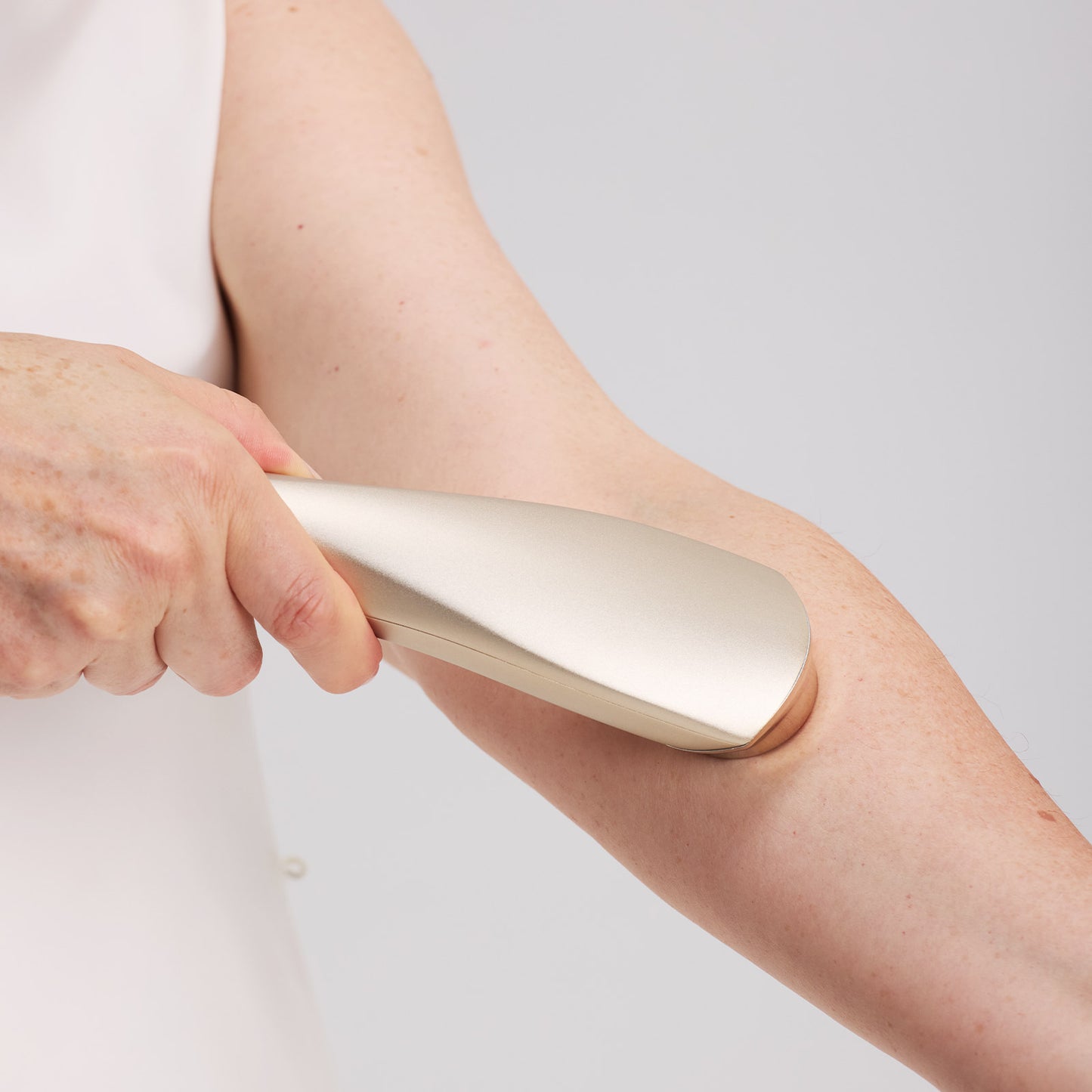
Place the electrode pads firmly against your target areas (cheeks, forehead, neck—avoid thyroid area). Hold the device completely stationary (stamp-like application).
*No gel required.

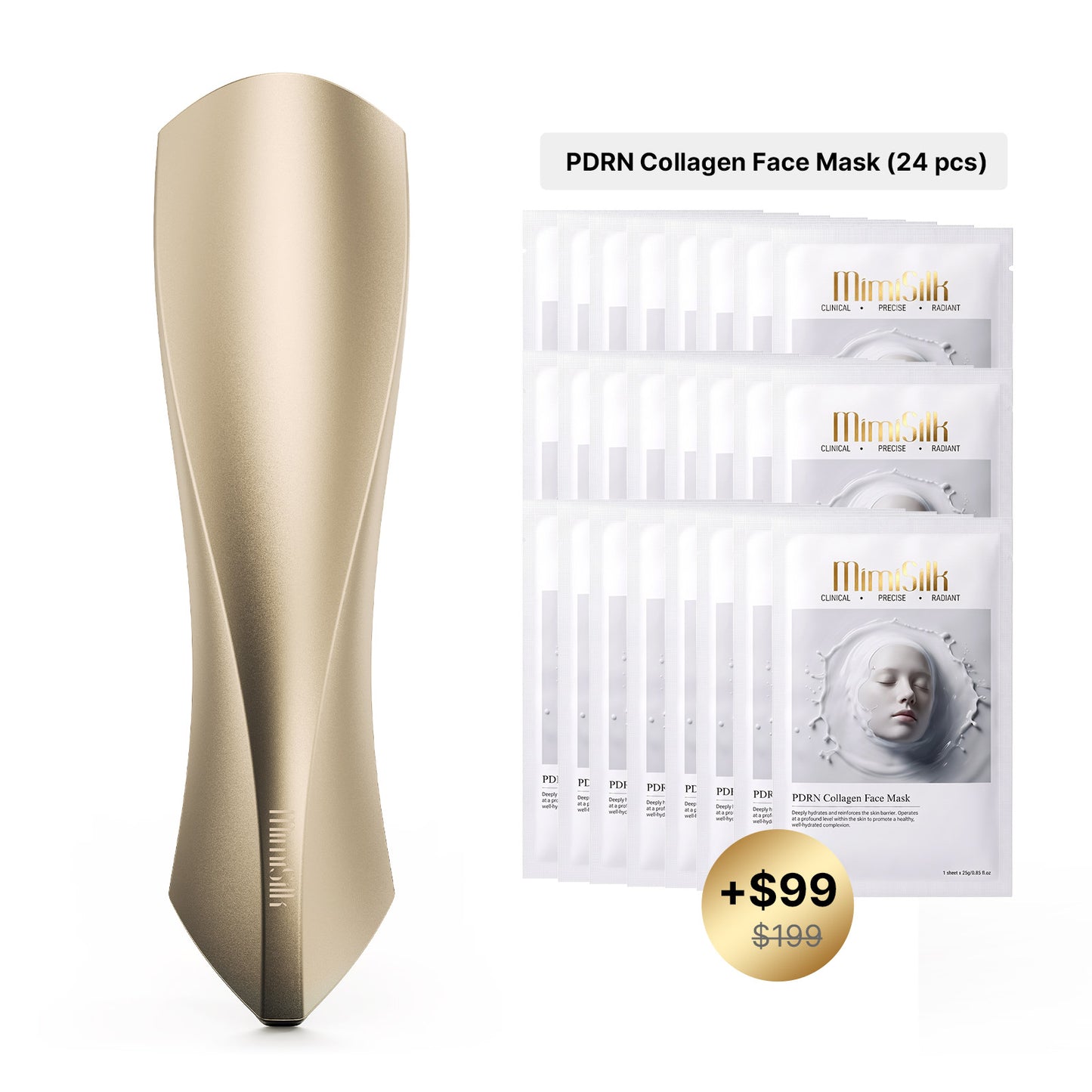
Skin may feel warm or dry post-session. Immediately apply the included MIMISILK® PDRN mask or your own mild, hydrating skincare to cool and soothe the skin.
FAQ
-
What is radio frequency?
Radio Frequency, abbreviated as RF, is a type of high-frequency alternating electromagnetic wave. Its frequency ranges from 3 kHz to 300 MHz.
Principle: By using currents of specific frequencies, it precisely and selectively transfers thermal energy to the dermis and subcutaneous tissues of the skin. When the dermal tissue is heated, it causes the originally slack collagen fibers to instantly heat up, contract, and continuously stimulate the regeneration of collagen protein. Eventually, this reduces wrinkles and tightens the skin, resulting in a youthful appearance. -
Does Vera RF Sculpt™ require conductive gel?
No. The Vera uses displacement-current technology, which does not rely on traditional conductive methods. Traditional radio frequency requires gel-assisted conductivity, whereas displacement current can cross the stratum corneum via the electric field and directly trigger molecular oscillations and heat generation in the dermis, thereby enabling deep heating without the need for gel. At the same time, because the epidermis has lower conductivity, heat is less likely to accumulate on its surface, resulting in greater comfort.
-
How to use the Vera RF Sculpt?
- Cleanse your skin, then apply facial oil or moisturizer to keep the skin hydrated before using the device.
- Treat the cheeks, sides of the nose, forehead, or neck, avoiding the thyroid area. No gel is required. Hold the device in place over each treatment area using the stamp-like application.
- After a session, your skin may feel slightly warm or dry. You may apply the PDRN face mask included with Vera, or use your own gentle skincare products to help provide immediate hydration and moisturization.
- Be sure to use sun protection when going outdoors the day after treatment. We recommend applying a generous amount of sunscreen (SPF 30+ PA++++). For additional protection, wear a sun hat and sunglasses.
Tips:
- Vera requires a power source to operate.
- Turn on the device and select Level 1. Use Level 1 daily for one month before increasing the intensity. Afterward, use Levels 2 and 3 on alternating days. At Level 1, radiofrequency (RF) heat reaches the dermis. Even if you feel minimal sensation on the epidermis (skin’s surface), the device is still working effectively. Please do not move to Level 2 or 3 too soon.
- After holding the device against your skin for 6–10 seconds, it will emit a series of beeps to remind you to move to the next area.
-
What are the energy and temperature corresponding to each of the 3 levels?
Tailor your treatment to your specific needs with three graduated power levels:
- Level 1 (4.5W): Gentle maintenance and enhanced absorption of skincare actives. The dermis temperature reaches 45-46°C / 114.8°F.
- Level 2 (9W): Targeted treatment for fine lines and early signs of skin laxity. The dermis temperature reaches 47-48°C / 118.4°F.
- Level 3 (18W): High-intensity sculpting for jawline definition and deep wrinkle reduction. The dermis temperature reaches 49-50°C / 122°F.
-
How is the precise control effect achieved with different skin thicknesses?
MimiSilk Vera has dual intelligence systems.
- Intelligent temperature control: Skin temperature is consistently kept below 117°F, ensuring safety and comfort.
- Intelligent time control: 6-10 seconds each time, full face for 10 minutes. Real-time monitoring of skin impedance and dynamic adjustment of energy output ensure that safe and effective care energy can be provided to different skin types and different areas.
-
What does RF feel like?
Most users experience a comfortable warming sensation during treatment.
-
Stamping vs. sliding, which is better?
Compared with the stamping type of radio frequency, the sliding type that requires gel has the following disadvantages:
- They can clog pores and cause breakouts;
- They are inconvenient to clean and stick to hair;
- The gel absorbs some of the device's energy, reducing overall effectiveness;
- The gliding scanning method with gel can pull on the skin, worsening skin laxity;
- Gel is a consumable, which increases skincare costs over time.
-
How often should I use it?
The level 1 can be used daily. After upgrading to the 2nd or 3rd level, it is recommended to use it every other day, depending on your skincare goals and tolerance.
-
Is there downtime?
No. RF treatments are non-invasive and designed for daily-life compatibility.
-
When will I see results(MimiSilk Vera)?
Many users notice improved glow and firmness within 4-8 weeks of consistent use. Longer-term collagen support improves gradually over time.
- Please use it at level 1 for at least 30 days. Once your skin has established tolerance, then upgrade to levels 2 or 3. At level 1, the expected effect usually takes at least 28 days to manifest. Generally, following the collagen regeneration cycle, a more noticeable effect will occur within 2-3 months.
- When your skin can tolerate level 3, you can see a short-term lifting and tightening effect within 7-14 days.
-
Can I use skincare afterward?
Yes. The device may help support enhanced skincare absorption after treatment.
-
Will the Vera RF device result in fat loss?
No. Because:
- The 6.25 MHz frequency is close to that of Thermage (6.78 MHz). However, due to the safety restrictions of home-use devices, Vera's power output is only about one-quarter that of professional-grade RF devices used in clinics.
- The difference in penetration depth, or more specifically, the difference between monopolar and multipolar technology, means that it falls far short of achieving any lipolytic, or fat-dissolving, effects.
- During treatment, the epidermis is 4–6°C cooler than the dermis, which reaches approximately 39-44℃/111.2°F. The temperature in the fat layer does not exceed 40℃/104°F.
In conclusion, Vera will not cause fat loss.
-
What are the precautions for aftercare and sun protection?
- After use, your skin may feel slightly warm or dry. You may apply the PDRN face mask included with VERA or use your own mild skincare products to help cool the skin and to provide immediate hydration and moisturization.
- Be sure to use sun protection when going outdoors the day after use. We recommend applying a generous amount of sunscreen (SPF 30+ PA++++). For added protection, wear a sun hat and sunglasses.
-
What are the differences between Vera and Iris? How should we choose?
Both Vera radiofrequency (RF) and Iris laser can promote collagen regeneration, but their mechanisms of action differ.
- Iris laser uses selective photothermolysis, making it more suitable for localized issues such as brightening skin tone, reducing pores, acne scars, pigmentation, and fine lines. Vera RF, on the other hand, heats the dermis evenly and volumetrically, making it more suitable for skin tightening and overall facial contour lifting. Compared with laser-based precise repair, RF is better suited for large-area collagen activation and firming/lifting.
- If you only have skin laxity, Vera is the best choice. If you have other anti-aging needs, Iris is a more cost-effective, multi-functional home device. Of course, if you want to address skin laxity, pores, acne scars, and pigmentation simultaneously, having both devices is a good option. You simply need to use them every two days.
-
How to Use MimiSilk Iris and Vera Together?
Allow a 48-hour interval between using the Vera, the Iris, and other home-use laser devices. There are two ways to use two devices together:
For full-face treatment: Space the use of the Iris and Vera 48 hours apart, resulting in a combined total of three to four sessions per week for the two devices. There is no need to worry about the frequency being too low, as the thermal effect on your skin remains balanced.
For partial-face treatment: For example, use the Iris on the upper half of the face and the Vera on the lower half. You can follow the specific usage schedules for each device: use the Iris 3–4 times a week (following the 8+4 cycle), and use the Vera on Level 1 daily for the first month.
-
What is the difference between the Vera and Thermage?
In the home-use device market, Vera operates at 6.25 MHz, which is closest to the 6.78 MHz frequency used in professional Thermage treatments. Both are essentially radiofrequency volumetric heating technologies that stimulate dermal collagen contraction and regeneration through heat to achieve a firming and lifting effect.
The difference is that Thermage uses professional-grade monopolar radiofrequency, resulting in stronger, more painful, and more expensive sessions. Vera, on the other hand, uses home-use multipolar displacement-current radiofrequency, which causes no damage to the epidermis and produces only a slight warming sensation. It has no recovery period and emphasizes safety and comfort for home use, making it the most cost-effective Thermage alternative for home use.